

The Question Your Pollution Incident Reduction Plan Still Can't Answer

Ask anyone who's worked a wastewater site for twenty years and they'll tell you whether a reading looks right for that site on a rainy Tuesday in November, as opposed to just what the numbers say. Trying to find that information written down would be difficult, though. It's unlikely pen ever touched paper, and that insight leaves when they do.
That knowledge gap is running at a hundred miles an hour into a hard deadline. Since 1 April 2026, every water company in England and Wales has had to publish a Pollution Incident Reduction Plan (PIRP), signed off personally by the chief executive. However, it's not the chief executive making the calls that matter day to day. Someone on that asset is, on the ground, today. Get it wrong, and it isn't them who's exposed… it's the chief executive, whose personal approval of the plan means they have to show that all reasonable steps were taken and due diligence was done.
Here's the acid test: when your plan says an incident was spotted, contained and dealt with, what actually proves that? Overflows are monitored by event duration monitoring (EDM), but that gives you indirect signals. It tells you something changed, not what actually happened at the asset.

The economics of mistakes like this are well and truly eye-watering. The reality is variable penalties of up to £500k, decided on the balance of probabilities, plus an automatic £10k for not reporting within four hours. That makes the company's own record its defence. Nobody gets a bigger budget to deal with this. The stakes have simply gone up, and a defensible record is as much in the interest of the people funding the business as it is everyone else's. Without an independent record, you've got nothing to fall back on if a regulator disagrees with your version of events.
Ofwat's own artificial intelligence (AI) adoption plan, out on 15 June 2026, points at the same gap: evidence of what actually happened. Ofwat doesn't beat around the bush about it. As Ofwat puts it, the plan lays the foundations for the new regulators, with a proper joint plan not expected until 2027 to 2028. Build for that shake-up now, and you're ahead of it commercially, reputationally and operationally, not just compliant for this year.
Getting the evidence right cuts both ways: it protects the people carrying the risk, and it makes the record more accurate for everyone relying on it.
Ofwat backs this up directly in its AI adoption plan. AI can help make a decision, but the water company still owns the judgement behind it, which holds regardless of whoever built the tool. The record behind that decision only works if it's independent of anyone's account after the fact, built from what a sensor actually saw.
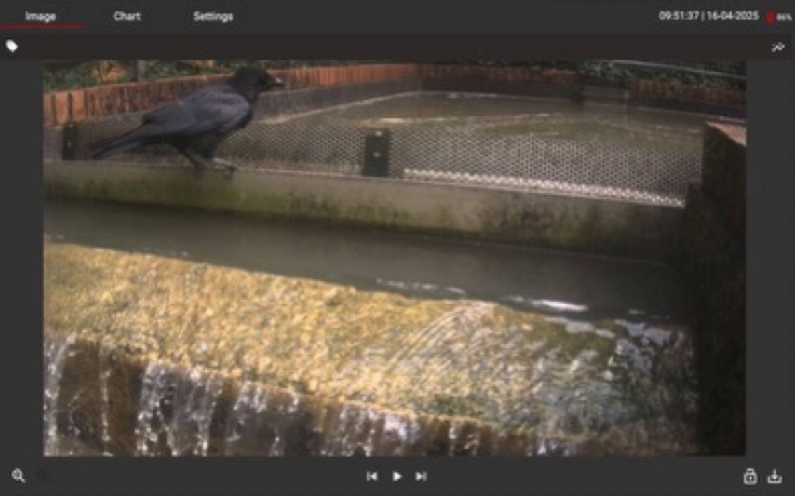
This is something we work directly with our customers in the water industry on. Battery-powered sensors go into locations nobody's able to physically watch around the clock, from water treatment works to sewage overflow tanks, without any mains power at all. The AI behind them analyses the timestamped imagery independently, distinguishing a genuine event from misfiring telemetry, and flagging what's actually worth a person's attention rather than handing someone hours of data to sit through. What we've found, across our customers, is that problems get caught early, and when something does happen, there's visual evidence to prove it.
A named person checks every detection before it becomes an incident, so nothing gets actioned without someone putting their name to it. That is consistent with Ofwat's principle that AI supports judgement rather than replacing it. When someone retires, what those sensors picked up stays put instead of walking out the door with them, so whoever takes over can see how a site actually behaves, instead of spending years learning it from scratch.
Ofwat's AI consultation is due in autumn 2026, the last step before its first proper guidance is published. When it does land, the biggest advantage won't sit with the companies who have the slickest policy response. It'll sit with the ones who can already show their working.
Try this: ask yourself the same question someone with years on site already carries around in their head every rainy Tuesday in November. If a regulator pulled up one of your incident records tomorrow, what would you actually be able to show them? If the honest answer is a set of EDM alerts and a reconstruction after the fact that would take hours to pull together, that's the gap worth closing, before autumn closes it for you.


Comments